
700 Kopp Ln, Clarksville, IN 47129
951 E Lewis and Clark Pkwy, Clarksville, IN 47129
We make it easy to get discovered. Whether you're a Boat Club, Boat Rental, Marina or Boat Dealer — we connect you with boaters looking for what you offer. Hassle-free setup. Flexible plans. Maximum exposure.

Boats for Every Buyer
Shopping for your first boat? Or ready to upgrade? Slipstream connects you with dealers offering new and used boats across all price ranges. From fishing skiffs to luxury cruisers, you’ll see verified listings, compare options, and connect directly with sellers to find the boat that’s right for you.
Our blog has destination guides, boating tips, gear advice, and stories from people already on the water. It's a great way to plan your next outing.
Dealers in Clarksville carry Ranger, Scout, Sea-Doo and Yamaha WaveRunner, both new and pre-owned depending on the dealer.
Indiana does not issue a separate recreational boating license; operators of motorboats over 10 horsepower, including personal watercraft, generally must carry a valid driver’s license. A person age 15 or older without one may operate only after completing an Indiana Department of Natural Resources approved boater education course and carrying an Indiana BMV identification card. No one under 15 may operate a motorboat over 10 horsepower or a personal watercraft.
The rule has no birth date cutoff. Rental customers are not listed as exempt. A temporary course certificate may document completion, but it does not replace the required BMV ID. Boats with 10 horsepower or less are excluded from these operator requirements.
Source: Indiana Department of Natural Resources, in.gov/dnr (faqs.in.gov)
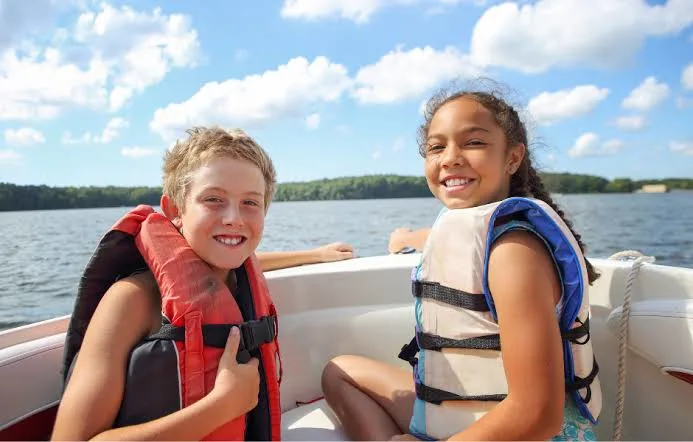
Indiana boaters should know the DNR rules on life jackets, alcohol, registration, operator age and shoreline speed. Carry one wearable U.S. Coast Guard approved life jacket for each person aboard. On waters of concurrent jurisdiction, which are Lake Michigan, the Ohio River, the Wabash River where it forms the Illinois boundary and the Great Miami River, every child under 13 must wear one unless below deck, in an enclosed cabin, or the boat is docked or at anchor.
Operating a motorboat at a blood alcohol level of 0.08 percent or greater, or while otherwise intoxicated, is illegal. Watercraft must be registered and display valid decals unless exempt. Operating a motorboat over 10 horsepower requires a valid driver's license, or being at least 15 with a boater education course and a Bureau of Motor Vehicles identification card. Motorboats must stay at idle speed within 200 feet of a lake or channel shoreline.
Source: Indiana Department of Natural Resources, in.gov/dnr (faqs.in.gov)
June through August is the best overall time to go boating in Indiana, with the core summer season running roughly from Memorial Day to Labor Day. Visit Indiana identifies summer as the primary season for swimming and water sports, while spring and fall offer milder conditions and fewer crowds. May and September are therefore good shoulder months, though the water is cooler: Indiana DNR says lake surfaces warm and stratify in summer, then cool and mix again in fall. Check DNR advisories before launching, because weather and high water can trigger temporary speed limits or closures.
Source: Visit Indiana (visitindiana.in.gov)
Indiana’s best boating choices span several distinct water types: Lake Michigan for open coastal water in the northwest, Lake Wawasee for northern Indiana’s natural glacial lake country, Chain O’Lakes State Park for connected kettle lakes, and Monroe Lake and Patoka Lake for large inland reservoirs. Chain O’Lakes has nine connected lakes suited to paddling and electric motor boating. Indiana DNR identifies Wawasee as the state’s largest natural lake and describes Monroe and Patoka as man made reservoirs, giving boaters options from sheltered lake chains to broad, open water.
Source: Indiana Department of Natural Resources, in.gov/dnr (in.gov)
Popular boating destinations in Indiana include Monroe Lake near Bloomington, Lake Wawasee, Tippecanoe Lake and Patoka Lake. Monroe is Indiana’s largest lake and has numerous marinas for boating; Wawasee is the state’s largest natural lake at 3,000 acres; Tippecanoe is Indiana’s deepest natural lake at 123 feet; and Patoka offers an 8,800-acre reservoir with 10 launch ramps, boating, fishing and waterskiing. These destinations give boaters a choice between southern Indiana’s large reservoirs and northern Indiana’s natural glacial lakes.
Source: Indiana Department of Natural Resources (in.gov)