Are you dreaming of becoming a boat owner, but is the price of a new boat putting you off? Don’t worry. Buying a used boat will help you realize your dream without causing a financial strain. A thorough inspection will ensure you are making the right investment, avoiding costly repairs, paying the correct price, and identifying issues in the boat. If you want to avoid the risks of making the wrong decision and regretting it later, you should be very careful while inspecting the vessel. Here is a guide that covers everything from checking the documents and the boat to a professional survey.
Used Boat Inspection Checklist at a Glance
| Item of Inspection | Things to Check |
| Documents | Bill of sale, title proof, registration document, ownership history, maintenance details, HIN, and history of previous repairs |
| Hull & Exterior | Cracks in fiberglass, damage in paint, scratches in the exterior, signs of previous repairs, and wood rot in motor mount |
| Engine Systems | Oil levels, cracks in the belt, smoke while starting the engine, leaks in the exhaust system, and corrosion |
| Electrical Systems | Navigation lights, GPS, radio, wiring, switches, battery, and anchor lights |
| Interior | Mold and mildew in cabin, tears in upholstery, condition of safety gear, and ventilation |
| Running Gear | Smoothness of throttle, shaft, rudder, and propeller |
| Sea Trial | Performance of steering, leaks in bilge, and acceleration |
| Marine Survey | Get the services of a professional surveyor |
| Final Inspection | Estimate price and repairs and make negotiations |
Why Every Used Boat Should Be Inspected Before Purchase
Although a used boat may look well-maintained and clean, there may be hidden issues that can prove expensive if left undetected. The most common issues include fluid leaks, cracks in the hull, structural rot, blisters in the fiberglass, corrosion, electrical faults, and engine problems. A poorly maintained boat may need major repairs after purchase. To avoid them, a thorough inspection is essential. Moreover, there may be insurance, title, and ownership issues. A professional marine survey and sea trial will help you to evaluate the vessel’s condition better and negotiate with the seller with more confidence.
What to Check Before Inspecting a Used Boat?
Preliminary research on a used boat helps you decide whether to proceed with physical inspection.
Verify Ownership and Usage History
Inspect the Bill of Sale to ensure there are no issues in the transfer of ownership from the previous owners. Check the HIN plate to confirm if it is the same as in the documents. Make sure there are no unpaid liens. Find out if there is any previous history of major accidents. Ensure the boat was properly stored when not in use and winterized during the off-season. Inquire if the boat was mainly used in freshwater or saltwater.
Check Maintenance and Repair Records
Ask for complete maintenance and service history to find out if the owner has taken good care of the vessel and if the main components were maintained well. The main checks to be done include documented oil and filter changes, impeller replacement, storage and winterization receipts, and replacement of risers. Focus on records for major repairs.
Verify Title, Registration, and Hull Identification Number (HIN)
Verify the title and registration documents are current. Check if the primary HIN and hidden HIN numbers match the numbers on the title, bill of sale, and other documents. If there is any mismatch, it should be investigated thoroughly before proceeding to the next step. Moreover, look for tampering signs, like scratches and fresh paint, in the HIN area. Check for liens before you commit: for a U.S. Coast Guard documented vessel, order an Abstract of Title from the National Vessel Documentation Center; for a state-titled vessel, check the title record in the state where it is registered.
Inspect the Exterior and Hull
Structural problems are expensive. So, inspecting the exterior and hull is important.
Inspect the Hull for Cracks, Damage, and Repairs
You should check carefully for cracks, scratches, signs of previous repairs, and blisters. To test the hull carefully, you should run your hands over the hull and tap the fiberglass. Cracks are of many types. Some small spider cracks may be cosmetic, but stress cracks should be inspected carefully because they can sometimes indicate underlying structural movement or damage. You should focus more on the keel, chines, and bow while inspecting the hull. Check for changes in color and texture, which are signs of major repairs in the past.
Check for Blisters, Soft Spots, and Water Damage
Rub your hands below the waterline and feel for blisters, which can be in the form of bumps and pimples. Inspect the hull for blistering and note the size, number, and location of any blisters. Significant or widespread blistering should be evaluated by a marine surveyor. If there are too many blisters, it can be difficult and expensive to fix. To find soft spots, walk on the deck, pressing your feet firmly. You can tap the surface with a plastic mallet or a coin — never a steel hammer, which will chip the gelcoat. A dull or hollow sound may indicate delamination, moisture intrusion, or deterioration of the core and should be investigated further.
Examine the Deck, Transom, and Stringers
Inspect the deck closely for soft spots, cracks, loose screws, and water leaks. Check for abnormal odors, which may be caused by trapped moisture. Examine the stringers for stains, cracks, and soft wood. Inspect the transom for hairline cracks. If you have any doubts that some components are weak, it is better to get the advice of a professional.
Inspect the Trailer (If Included)
If the trailer is included, you should check the frames carefully for rust. See if the tire treads are sufficient and make sure there is no sidewall cracking. Examine the wheel bearings and ensure there are no grease leaks. Inspect the latches, brake lights, signals, and wiring. Check if the bunks are carpeted and the rollers are good, without exposing hardware or wood.
Look for Signs of Neglect or Poor Maintenance
You can find signs of poor maintenance and neglect if there is mold, grime, peeling paint, and corrosion. Cracked hoses, torn upholstery, worn seals, missing screws, rusted steel components, and loose parts are also proof of bad maintenance. Marine growth on the vessel shows that the boat has been neglected for a long time.
Inspect the Boat Engine and Mechanical Systems
Inspecting the engine and mechanical systems is important because fixing them can be very expensive.
Check Engine Condition and Operating Hours
First, inspect the engine visually for salt buildup, corrosion, and melted wires. You should press belts and hoses to verify there are no cracks or swelling. Cylinder compression should be checked. If you are not sure about cylinder compression, you can seek help from a professional. Check the operating hours on the hour meter at the helm. There is no universal number of engine hours that defines a well-used or poorly used recreational boat. Evaluate the hours alongside the engine type, age, usage pattern, and maintenance history.
Inspect the Fuel System and Components
Look carefully for corrosion or soft spots in the fuel tank, and for signs of leaks or rust. The vent should have no blockages, the fuel lines shouldn’t be brittle, and metal hose clamps should be rust-free. A damaged fuel line is a major concern because of fire risk. Ensure the fuel system is properly maintained.
Examine the Cooling System
Inspect the valves to find out if they run smoothly and to check if there is any marine growth or blockages. The wire mesh in the strainer should be free of clogs. Make sure the strainer is not cracked and has no leaks. The rubber impeller in the water pump should be in good condition. Inquire when the impeller was replaced. During sea trial, you should ensure the cooling system operates at the normal temperature.
Test the Steering and Control Systems
The steering should not be stiff. So, turn the wheel back and forth to ensure there are no tight spots and unusual resistance. Check if the throttle is smooth and the cables are not rusted. Inspect the connections, such as arms and fasteners are not loose. During the sea trial, you should ensure the steering operation is smooth in all directions.
Inspect Belts, Hoses, and Mechanical Components
Check the belt for frays, splits, and cracks. Examine the pulleys to ensure they are not worn out and misaligned. The belts should not be loose. So, press them with your fingers. If they deflect more than half an inch, it indicates they are loose. Do the squeeze test for hoses to check if they are firm. Inspect all main mechanical components.
Inspect Electrical Systems and Onboard Equipment
Test electrical systems and onboard equipment as much as possible, because electrical faults often can’t be spotted by visual inspection alone — many only show up when the circuit is under load.
Test Batteries and Wiring Connections
Ensure there are no leaks or cracks in the battery. The battery should be locked firmly to make sure it does not slide away. Check if the wires are thick and corrosion-free. Ask when the batteries were replaced. Look for signs of overheating in the electrical panel. Check the resting charge of the batteries to find out if they are healthy.
Inspect Navigation Lights and Electronics
Switch on all lights to check if all of them are working. Test all electronic items, including the radio, GPS, fish finder, depth sounder, and others are functioning properly. The VHF radio should be clear in reception and transmission. The radar should not have boot errors or dead pixels. Check the antennas of the GPS and VHF. Make sure there are no loose connections.
Check Pumps, Gauges, and Accessories
The main pumps in a boat include bilge pumps, a livewell pump, and a freshwater pump. Test if the livewell pump fills and drains automatically. Check if the automatic float switch of the bilge pump is working. Check the water pressure of the freshwater pump. If the vessel has a marine toilet, check that the water discharge system is functioning.
Inspect the Interior and Comfort Features
Check Seats, Upholstery, and Flooring
Seats and upholstery are likely to get faded from exposure to the sun. Check them for tears, mold, and mildew. Press the cushions and test them for moisture content. Look for intact stitching in upholstery. Walk across the floor slowly and firmly to ensure there are no soft spots. If the boat has a carpet, check it for tears.
Inspect Storage Areas and Compartments
Ensure the latches are not broken. Open and close all locks and hinges to test if they are functioning smoothly. There should be no musty smell coming from the compartments. Pump compartments should be clear of trash. Check inside the storage areas and look for any signs of pests and corrosion. Focus on areas under seats and sinks to check for leaks.
Look for Mold, Moisture, and Odor Issues
If the foam is wet or mold is hidden somewhere, there can be a musty smell. If the boat is poorly maintained or if there is leakage, you will see brown stains on the walls and floors. Check in storage areas and under boxes for dampness. Moisture in the vessel and a sour smell are also an indication of poor ventilation.
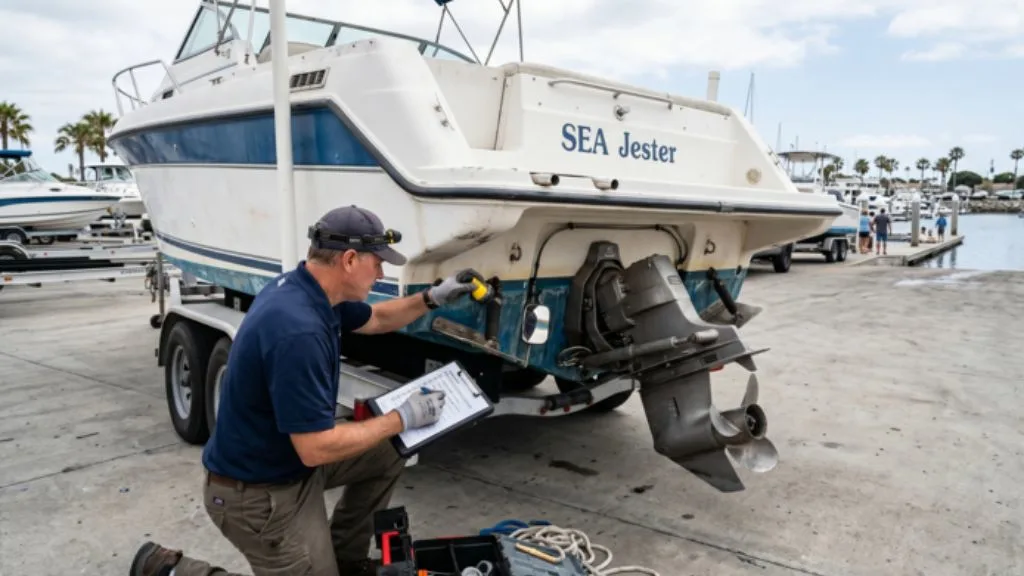
Inspect the Propeller, Outdrive, and Running Gear
Checking below the waterline is important because these components play a major role in the performance of the boat.
Inspect the Propeller for Damage
Check the propeller blades for cracks, bends, and nicks. If there are cracks along the root and body, the propeller may need an immediate replacement. So, the blades should be examined closely. Check if the propeller is properly secured and spinning without any wobbling. Shake it to check if there are any loose fittings. Spin the propeller to ensure smooth rotation.
Check the Shaft, Rudder, and Hardware
Ensure that the shaft is not loose and does not have worn bearings. Moreover, the shaft should not wobble when shaken or turned down. Move the rudder to check if it is tight. Inspect the seals of the rudder to look for water leaks. The hardware to be examined includes struts, brackets, hull fittings, sea cocks, and hydraulic lines.
Examine the Outdrive and Drive Components
Look for cracks in the exterior housing. It should move up and down smoothly. Check the oil level in the outdrive. See if the oil is milky. Milky oil indicates water has leaked into the oil. Look for leaks and deterioration in the drive components. During a sea trial, watch out for strange noises and vibration during movement.
Take a Sea Trial Before Buying
A sea trial is important for buying a used boat because you will be able to understand the actual condition of the boat only when you drive it.
Test Starting and Engine Performance
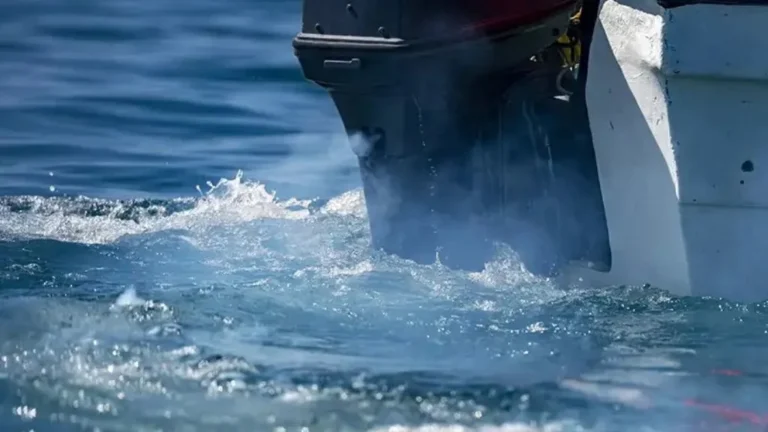
You should cold-start the engine if you want to find the real condition of the boat engine. Check if the seller has already started the engine and warmed it. The crank time for an engine in healthy condition to start is just a couple of seconds. Hesitant starting can point to a weak battery, poor connections, or a fuel-delivery problem. Listen for abnormal sounds. Check the smoke from the exhaust. Excessive smoke is not a good sign. Increase the throttle and test if the engine responds well. Keep listening for warning sounds and keep looking for signs of overheating.
Test Steering, Handling, and Stability
Turn the steering at different speeds, starting from low to medium and high. Check for jerks and difficulty in steering, which indicate mechanical problems. Ensure the vessel is stable while increasing the speed. Feel the lateral stability of the boat by standing along the open deck.
Test Acceleration and Throttle Response
Move the throttle gradually from idle to wide open. Observe the response of the boat engine from zero level to full throttle. If the engine hesitates or responds sluggishly, it can signal issues in fuel delivery and problems in the engine or propeller. The transition should be crisp and smooth, without bogging or excessive smoke.
Watch for Unusual Noises, Vibrations, and Warning Lights
Pay attention to unusual noises like grinding and squealing. Keep watching for alarms and beeps when the boat runs at a high speed. Is there a heavy vibration or shaking when speed is accelerated or slowed down? It may indicate problems in the drive, shaft, or propeller. The warning lights should turn on and then turn off when the engine is started.
Professional Boat Survey and Inspection
A professional surveyor can detect issues and concerns that you may have missed. So, if you want to make a risk-free transaction, getting the services of a marine surveyor is better.
When to Hire a Marine Surveyor?
If you are planning to buy expensive vessels like yachts and cruisers, it is better to have them assessed by a professional. If you suspect hidden damage or if you are not certain about the maintenance history, a marine survey can uncover hidden issues. A professional’s help is essential because you may not have the experience or expertise to evaluate used boats.
What Does a Boat Survey Include?
A boat survey includes a thorough check of the engine, structure, interior, and exterior. The main areas included in the inspection are the hull, mechanical systems, electrical systems, plumbing systems, safety gear, and structural components. While inspecting the mechanical systems, the components to check are the engine, exhaust system, and steering wheel. The survey may also include a sea trial if needed.
Why a Survey Matters for Financing and Insurance?
If you are planning to use your boat as collateral, the lenders will ask for a valuation from a professional surveyor. Most moneylenders ask for an official valuation report, especially when providing loans for higher-value used boats. A survey is necessary for marine insurance because insurers and underwriters ask for a professional report to prove the boat is safe.
Common Problems to Look for When Buying a Used Boat
Hidden Hull Damage
Look for cracks, blisters, ripples, brown stains, and uneven spots on the hull. Sometimes, sellers may hide previous damage with fresh paint. Hidden problems in the hull can reduce the value of the boat and affect its safety. So, focus on areas around fittings and the keel.
Engine and Mechanical Issues
The major engine and mechanical issues to look for include damaged transoms, overheating water pumps, corrosion, cracked fuel lines, and clogged fuel tanks. Fixing issues like worn belts, hoses, cooling system, and drive components can be costly. So, pay more attention to them.
Electrical Problems and Structural Damage
Electrical problems to look for include white powdery deposits on wires and batteries, messy wires, dead batteries, and the working condition of the bilge pump, switch, radio, and lights. Structural damage to look for includes hull cracks, blisters, stringers, soft spots on the deck, and flexing in the transom.
Missing or Poor Maintenance History
Make sure the seller provides records, proofs, and invoices of regular maintenance. Missing documents may show poor maintenance history. Poor maintenance is risky and can cause major issues, including engine failure. So, ask for details about engine maintenance, storage, winterization, and repairs.
Signs of Poor Storage and Neglect
Signs of poor storage include spider cracks, soft spots on the deck, blisters on the hull, musty smell in storage compartments, water standing in the bilge, stained upholstery, and swollen wood. Look for these red flags while inspecting a used boat.
Questions to Ask the Seller
Why Are You Selling the Boat?
This is an important question because it helps determine whether the boat has any major problems. If the seller says he wants to upgrade to a newer one, ask for details like the model they are looking for and others. This will help you to decide if the answer is true or not. If you are doubtful about the way they respond to your questions, you should ask more until you are satisfied.
Has the Boat Been in Any Accidents or Major Repairs?
Ask the seller if the boat met with any accidents and if there were any major repairs. If there were any repairs, ask where the repair work was done and ask for receipts and other documents to support their answer. Be cautious if the seller’s answers are vague and is not willing to share invoices and documents with you.
What Maintenance or Upgrades Have Been Completed?
Ask when the battery was replaced, when safety gear was upgraded, how often oil was changed, when the upholstery was replaced, and when the boat was winterized. Ask for evidence and records to know which items need immediate replacement or care.
Final Used Boat Checklist Before Making an Offer
Confirm the Boat’s Overall Condition
Check the hull, engine, interior of the boat, safety gear, mechanical system, electrical system, and electronics to confirm the overall condition of the boat is good. Check the reports of the marine surveyor. Discuss with them in detail to know if the boat will need any immediate major repairs or replacements.
Estimate Repair and Maintenance Costs
Plan a realistic budget for the upcoming repair expenses and maintenance costs. If you are not sure, get estimates from professionals. To determine the actual cost of the boat, you have to add the immediate expenses to the cost price.
Negotiate Based on Inspection Results
Use your inspection results and documents provided by the marine surveyor to negotiate the price with the seller. Explain the immediate expenses to be incurred, concerns about missing maintenance records, and other issues, and ask for a price reduction. Don’t hesitate to walk away if there is any structural damage.
Final Thoughts
Buying a used boat involves a lot of investment. It can be risky if you don’t inspect the boat thoroughly. So, if you want to avoid financial surprises, you should check the documents, maintenance records, and the overall condition of the vessel. You should get professional help if you want a true and detailed assessment. A sea trial is essential to check for mechanical problems. Make a confident and informed purchase decision with your own sea trial combined with a professional survey done by a certified and experienced marine surveyor.
FAQs
What should I inspect first when buying a used boat?
You have to inspect the ownership and registration documents first. If you are satisfied, you can proceed with the physical inspection. The hull, structure, engine, interior, electrical system, and electronics should be inspected. If you have some concerns, you should go for a sea trial to confirm the overall condition of the vessel.
What Are the Biggest Red Flags When Buying a Used Boat?
The biggest red flags are overheating of the engine, messy electrical wires, soft spots on the deck, milky oil, corrosion, heavy rust, and excessive smoke. Missing maintenance records and undisclosed repairs are also concerns.
How Do I Check If a Boat is in Good Condition?
Inspect the hull, engine performance, interior and exterior of the boat, electrical systems, electronics, and safety gear thoroughly. Pay more attention to mechanical and safety issues. A sea trial is essential to ensure the efficient running of the boat. A professional marine survey would be helpful for making price negotiations with the seller.
Should I Get a Survey Before Buying a Used Boat?
Yes, a marine survey is recommended if you are planning to buy expensive vessels like yachts and cruisers. If you suspect hidden damage or if you are not certain about the maintenance history, a marine survey can uncover hidden issues. A professional marine survey would be helpful for making price negotiations with the seller.
How Much Does a Used Boat Inspection Cost?
The cost of inspecting a boat depends on the size, age, and model. A pre-purchase survey typically runs about $20 to $30 per foot, and most surveyors apply a minimum fee, so small boats work out higher per foot than the rate suggests. Haul-out charges and a separate engine survey are usually billed on top. Ask for a quote and compare before appointing a surveyor.
What Should I Check on a Boat Engine Before Buying?
First, inspect the engine visually for salt buildup, corrosion, and melted wires. You should press belts and hoses to verify there are no cracks and swells. Cylinder compression should be checked. If you are not sure about cylinder compression, you can seek help from a professional. Check the operating hours on the hour meter at the helm.
How Many Engine Hours Are Too Many on a Used Boat?
There is no strict limit. Many recreational boats run only 30 to 50 hours a year, so a high total on a young boat is worth asking about. As rough guidance, diesel engines can run smoothly even after 5000 hours, but gas engines’ performance may decrease after 1500 hours.
What Should I Avoid When Buying a Used Boat?
You should avoid boats with major structural damage, water leakages, soft transoms, a history of sinking or submersion, and major electrical issues. You should be careful with boats with missing maintenance records and mismatched documents. If you are not allowed to take a sea trial, you can walk back.
What Documents Should I Check Before Buying a Used Boat?
Inspect the Bill of Sale to ensure there are no issues in the transfer of ownership from the previous owners. Check the HIN plate to confirm if it is the same as in the documents. Make sure there are no unpaid liens. Ask for complete maintenance and service history.