You start your day on the water with so much excitement and expectations. All of them may be ruined if your boat’s engine overheats. Ignoring an overheated engine or not handling it correctly can result in costly repairs. Moreover, serious engine damage can leave you stranded. So, the issue of engine overheating should be fixed immediately. However, the good news is that most engine overheating issues are common, fixable, and preventable. They are common because boats pull water, which can cause frequent clogs and saltwater corrosion. Here is a guide explaining how to identify the symptoms, the common causes, and how to fix them.
Signs Your Boat Engine Is Overheating
As boat engines can overheat easily, it is important to identify the symptoms at an early stage.
Common Warning Signs
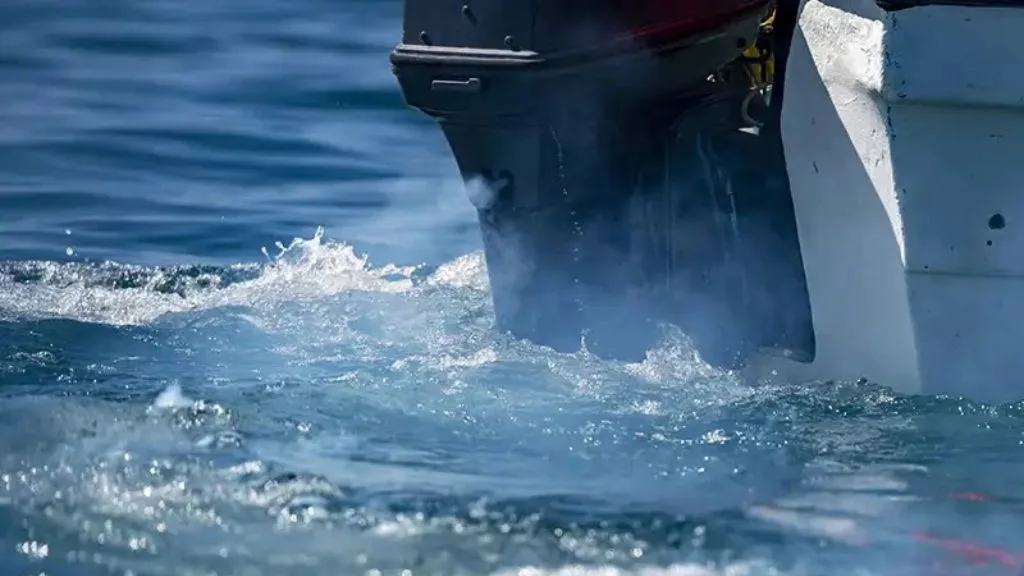
The temperature gauge moves from the green to the red zone. You may notice steam or mist coming from the engine with a burning smell. There may be a warning light, buzzer sound, or beep sound. The cooling outlet may spit water from the back, or there may be a trickle of water from it, which can indicate an issue in the cooling system.
Changes in Engine Performance
There may be a lag in the throttle performance. It may respond slowly when you try to increase the speed. Sudden loss of power is another symptom. Moreover, there may be difficulty in maintaining speed and reaching cruising speed. Metal expansion in the engine can cause unusual sounds. Sometimes, the engine may shut down on its own and will not turn on.
High Temperature Gauge Readings
When the needle moves past the standard limits into the red zone, it is a symptom that the engine is overheating. The thermostat sets the target: many outboards run a 140°F (60°C) thermostat and inboards typically 160°F or 180°F, so a healthy gauge usually settles somewhere between about 140°F and 180°F depending on the engine. What matters is your engine’s own specification, so check the owner’s manual for the normal range and the alarm point. For example, if the normal temperature of the engine is 180°F, a temperature reading of 200°F and above is a warning sign.
What to Do When Your Boat Engine Overheats
Reduce Speed and Shut Down Safely
The first thing to do is reduce throttle. Move clear of traffic to safe, open water with adequate depth — avoid shallow water, where you risk grounding and where the engine can draw silt and sand into the intake. Then shift to neutral, anchor, and slowly turn off the engine. Don’t touch any components or open the engine compartment. Leave the parts to cool for at least 30 minutes. If not, sudden heat and steam can cause burns and injuries.
Check Cooling Water Flow
As you throttle back, and again once the engine has been restarted, check the telltale, the small discharge stream at the back of the engine. A strong, steady stream of water is a good sign. A weak stream, no water at all, or steam coming out instead of water shows there is a problem in the cooling system. Once the engine has cooled and is switched off, check for blockage resulting from weeds, mud, or other debris. Don’t touch moving components.
Restart the Engine Carefully
After clearing dirt and debris and after the engine cools, you can restart the engine following the manufacturer’s instructions carefully. Then check the temperature and cooling water flow closely. If there is a temperature increase again and if the water flow remains weak, then the best thing is to shut down the engine at once.
Know When to Call for Assistance
When you can’t find the cause of overheating, and if the engine overheats even after clearing the debris, it is time to call for professional help. Moreover, if you suspect a broken water pump, you should call for assistance. If you suspect mechanical damage and the engine does not restart, it is better to call for towing.
What Happens If a Boat Engine Overheats?
When a boat engine overheats, it can cause serious mechanical damage. The long-term damages include cracked metal, warped cylinder heads, damaged gaskets, a melted impeller, and a seized engine. It may not be possible to restart in severe cases. The repairs may be intensive and costly. The immediate effects are power loss, a spike in temperature gauges, and loss of water flow.
Common Causes of Boat Engine Overheating
Knowing the common causes will help you to identify problems at an early stage and take appropriate action.
Blocked Water Intake
Water pumps in a boat keep sucking. The sucking action can pull weeds, plastic bags, mud, and other debris from the water, which can block the water intake. When water intake decreases, engine temperature can increase. Water intake may be blocked even when the vessel is anchored due to the growth of aquatic weeds around it.
Worn or Damaged Water Pump Impeller
Rubber impellers are present inside the pump, which supplies water to the engine. Impellers inside the pump circulate and spin cool water. They may get worn out, cracked, brittle, or damaged over time. So, the supply of cool water becomes weak and can result in rising temperatures.
Clogged Cooling System
The cooling system may be clogged with salt, mud, weeds, broken pieces of rubber impeller, marine growth, and mineral scales. The clogs restrict the movement of water through the system. When heat is not removed completely, the engine temperature will shoot up.
Faulty Thermostat
When a thermostat fails to operate, it most often sticks closed. It can also stick open, which makes the engine run cold rather than hot. So, water gets trapped, and cooling water cannot circulate through the cooling system. Heat builds up inside the engine and can cause overheating. The main reasons for the thermostat to get stuck are rust and salt crystals.
Low Coolant Levels
This applies to closed (freshwater) cooling systems only. Raw-water-cooled engines, including most outboards, have no coolant reservoir — for those, the equivalent fault is restricted raw-water flow. The reasons for low coolant levels are evaporation and leaks. When the coolant levels are low in a closed cooling system, air pockets are formed. Moreover, heat cannot be removed when coolant levels are insufficient, resulting in high engine temperatures.
Exhaust System Restrictions
Exhaust restrictions may be caused by salt and rust clogging exhaust elbows, corroded exhaust risers, collapsed exhaust hoses, and debris blocking exhaust ports. A restricted exhaust system prevents the efficient removal of hot gases, which may increase engine temperature.
Other causes for overheating of a boat engine include internal problems in the engine, high external temperature, blower failure, and low water pressure.
How to Troubleshoot and Fix an Overheating Boat Engine
When you identify the cause, you can troubleshoot and fix it, if possible, after shutting the engine off.
Inspect the Water Intake
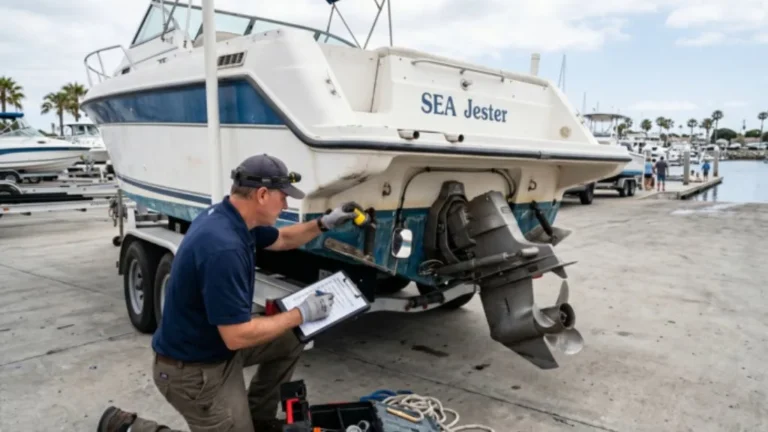
Inspecting for obstructions in the water intake is the first step. You should remove visible clogs like silt, mud, weeds, and other debris by raising and tilting the outboard so you can reach the intake from aboard the boat. If the blockage cannot be cleared safely from the boat, shut the engine down and call for a tow or a diver — do not get into the water to clear an intake yourself. You should be careful while removing the debris. You should remember to keep your hands off the propeller and moving components. After clearing, verify the flow again and ensure the cooling water returns normally.
Check the Water Pump Impeller
To check the impeller, first locate the raw water pump on the engine. Remove the screws and open the cover. Pull the rubber impeller using a puller. Check if the rubber has melted, worn, or cracked. If the impeller is broken and some of the pieces are missing, ensure the fragments don’t clog the cooling passage. If it needs to be replaced, do it according to the instructions given by the manufacturer.
Test the Thermostat and Coolant Levels
Remove the thermostat and test it in a pan of water heated gradually, checking that it opens at the temperature stamped on it or specified by the manufacturer. A closed thermostat causes a temperature increase. So, see if the thermostat opens. On engines with a closed cooling system, check the coolant levels after it cools down. Opening the cooling system before it cools down can cause burns. Check for leaks.
Clear Cooling System Blockages
The cooling system may be clogged with scale, salt, and debris. Flush out the clogged cooling system using the right method and products because the wrong methods and products can damage the parts. The raw water strainer should be cleaned and sealed tightly. If there are stubborn clogs, you can use a pump or hose to remove them.
When to Call a Marine Mechanic?
It is time to call a marine mechanic if the boat continues to lose power and shut down, and the engine continues to overheat even after clearing debris and following basic troubleshooting tips. You should get professional help if you are not able to diagnose the reason. Instead of running an overheated engine again and again, it is better to get professional help.
Boat Engine Overheating by Engine Type
Overheating varies for different engine types because each engine type has different components. You should understand them if you want to know the appropriate action to be taken.
Outboard Engines
One common reason for overheating in outboard engines is blocked water intakes, which can cause the cooling system to stop working or slow down. It may also overheat when the impeller wears out or hardens in the lower unit. A stuck thermostat, restricted water discharge, and salt buildup can also cause overheating.
Inboard Engines
Inboard engines draw their cooling water from outside the boat, through a seacock, a strainer, and the raw-water pump impeller. So, a broken impeller, a clogged strainer, or a blocked exhaust increases the engine temperature. On engines with a closed cooling system, low coolant levels and a failed thermostat can also spike temperature. Build-up of scale and salt can cause overheating in inboard engines.
Sterndrive (I/O) Engines
The sterndrive engines combine the features of both inboard and outboard engines. So there are many cooling points. Overheating in sterndrive engines is caused by clogged water intake, worn impeller, faulty thermostat, corroded risers, and damaged hose. Rusting and scaling will narrow the passages, restricting cooling.
How to Prevent Boat Engine Overheating
Prevention is better than cure because it is less expensive. Here are some prevention tips.
Follow a Regular Maintenance Schedule
Regular maintenance is important to prevent your boat engine from overheating. Regular boat maintenance should include checking the rubber impeller and replacing it at the interval your manufacturer specifies. Yamaha, for example, calls for replacement every 300 hours or three years, whichever comes first, while Mercury’s schedule has you inspect the impeller at 300 hours or three years and replace the impeller and pump housing at 500 hours. If you run in salt water, sandy shallows, or at sustained high RPM, inspect it more often than the book interval. Other key tasks are tightening loose belts and hoses, testing the thermostat, and clearing debris from the strainer.
Inspect Cooling Components Before Every Trip
Cooling system checks before every trip include checking raw water intake for clogs, inspecting the strainer for debris, verifying coolant levels are not low, and ensuring the reservoir tank is full on closed cooling systems, checking hoses for leaks, inspecting metal clamps for rust, and looking for loose fittings.
Flush the Engine After Saltwater Use
Seawater leaves salt crystals and mineral deposits, which will block the cooling system. So, the engine should be flushed with fresh water after every use. This ensures free flow of cool water and prevents the engine from overheating by reducing buildup.
Replace Cooling Components as Needed
Worn-out cooling components such as the rubber impellers in the water pump, damaged hoses, broken belts, and rusted clamps should be replaced without any delay. If you don’t act promptly, it can cause quick overheating and can result in severe engine damage.
Final Thoughts
Boat engine overheating is common and can be caused by a clogged cooling system, restricted raw-water flow, low coolant levels on closed cooling systems, a blocked exhaust system, and damaged impellers. If you want to avoid serious damage and expensive repairs, you should identify the problems early. Keep a close watch for symptoms of overheating. Taking preventive steps helps avoid overheating of the engine and ensures better performance. Some causes can be fixed when they occur. However, if the engine continues to overheat, then it is better to shut the engine down and get professional help. Address minor issues as early as possible. This will help avoid costly repairs.
FAQs
What Causes a Boat Engine to Overheat Most Often?
Causes of a boat engine overheating most often include clogged cooling passages, low coolant levels on closed cooling systems, blocked water intake, damaged rubber impellers, blocked exhaust pipes, poor maintenance, corrosion, salt deposits, and a stuck thermostat.
Can a Bad Impeller Cause Engine Overheating?
Rubber impellers are present inside the pump, which supplies water to the engine. Impellers inside the pump circulate and spin cool water. They may get worn out, cracked, brittle, or damaged over time. So, the supply of cool water becomes weak and can result in rising temperatures.
Why Does My Boat Engine Overheat at Idle While not Cruising?
It usually means the raw water pump is not moving adequate water at low speed. The inadequate flow heats the engine. Worn-out impellers and blocked water intake can also cause the same effect.
Why Does My Boat Engine Overheat at High Speed?
When the cooling system is not capable of handling high speed because of restrictions, clogs, and blockages, the boat engine heats up quickly. If the engine overheats at high speed even after cleaning the cooling system, you should seek professional help.
How Often Should a Boat Impeller be Replaced?
It depends on the engine, frequency of usage, saltwater use, and maintenance. Yamaha specifies replacement every 300 hours or three years, whichever comes first, while Mercury’s schedule calls for inspection at 300 hours or three years and replacement of the impeller and pump housing at 500 hours. Follow your own engine’s schedule, inspect the impeller more often than you replace it, and replace it straight away if the blades show any damage.
Why is My Boat Engine Overheating but Still Pumping Water?
A telltale stream confirms the pump is moving some water, but it does not confirm that flow through the whole cooling system is adequate. An engine can overheat while still producing a telltale stream, so it is better to shut down and inspect it.
Can I Keep Running an Overheating Boat Engine?
No, you should not continue to run an overheating boat engine because it may lead to severe damage, such as a seized engine. So, you should shut it down slowly after reducing the load and allowing it to cool.