It’s winter, and it’s time for you to wind up the boating season and think about winterizing it. Here’s a step-by-step guide to winterizing your boat and ensuring it is in good condition until it hits the water again.
Why Winterizing a Boat is Important?
Winterizing your boat is important to prevent severe damage, such as cracked pipes and blocked engines, that can occur due to freezing temperatures. It is also essential to protect your vessel from mold and corrosion. Winterizing protects the major components of a boat, including the engine, battery, and fuel system, from freezing. It prevents rodents and other pests from damaging wires. Proper winterization extends the life of your boat and ensures its optimal performance.
The timing of winterization depends on the location. You should be more concerned about North because of the hard freezes and ice. In the northern regions, winterizing should be completed before the first freeze. In the south, winters are not very severe. So, winterization focuses only on normal maintenance and occasional cold snaps.
What You Need to Winterize a Boat?
Here are the tools and supplies needed to winterize a boat.
- Antifreeze to protect engine pipes, livewells, and engines. It should be non-toxic and marine-safe to ensure it does not damage the seals and harm the environment.
- A fuel stabilizer to prevent fuel from deteriorating and breaking up, and varnish buildup. It is also needed to fix moisture issues when stored for a long time.
- Marine-grade lubricants to lubricate the moving parts
- Marine uses fogging oil to protect the internal parts of the engine from rust. Spraying fogging oil into the carburetor with fogging oil ensures it is not damaged.
- A durable and breathable cover to protect the boat from dirt, snow, winter debris, and moisture buildup.
- Dielectric grease for electrical connections and salt-safe cleaners for metals
How to Winterize a Boat Step by Step?
1. Clean the Boat
Clean the deck, hull, and interior of the boat thoroughly and get rid of salt residue and dirt. Remove food and trash. Use safe cleaning solutions to scrub the kitchen, cabin, canvas, and exposed fiberglass. This prevents the formation of mold and corrosion while in storage.
2. Drain Cooling System and Waterlines
Water in the plumbing lines is likely to expand in the winter and cause damage to pumps and hoses. So, drain water from the engine, bilge, and pumps. Drain the engine and run marine-grade antifreeze into the engine’s cooling system, and ensure the remaining water comes out of the exhaust. This helps in preventing the damage caused by residual water.
3. Stabilize the Fuel System
To stabilize the fuel system, add marine-grade fuel stabilizer in the tank and then run the engine for about 10 to 15 minutes. This helps to circulate the fuel through all parts of the system, including carburetors, lines, and injectors. This helps in the prevention of corrosion and fuel degradation during winter storage.
4. Replace Engine Oil and All Fluids
Replace the old oil in the tank with fresh marine oil. Ensure the proper level of oil, coolant, and steering fluid is maintained. Used oil in the engine can corrode the engine components. So, it should be replaced.
5. Fog the Engine
To fog the engine, start by running it and allowing it to warm up. Then spray marine-grade fogging oil into the air intake and cylinders. This coats the internal parts, including spark plugs, and protects the parts from rust.
6. Disconnect the Battery
Make sure all electrical equipment is switched off. To disconnect the battery, first remove the negative cable and then the positive one. Store it in a dry place where it won’t freeze. Disconnecting the battery is essential for avoiding discharge and damage in storage.
7. Store in a Secure Location
Dry the interior and exterior. Apply marine wax to exposed metal parts to avoid corrosion. Then, cover the boat with an appropriate ventilated cover to protect the boat from dust, moisture, UV, and pests. Store it in a secure location such as a trailer or indoor storage facility.
Winterizing by Engine and System Type
Outboard Engines
The key steps for winterizing outboard engines include stabilizing fuel, flushing the cooling system, changing oil, and fogging the engine. Consult your owner’s manual to know the instructions recommended by the manufacturer. Following the instructions specific to the model and make of your engine is always better.
Inboard Engines
The process of winterizing inboard engines includes draining water from the cooling system, flushing the engine, adding antifreeze, treating the fuel system, changing oil, and lubricating the moving parts. Check the user manuals for draining and antifreezing.
Plumbing Systems
Drain the tanks, turn off the pumps, and add and circulate antifreeze to prevent frozen lines and cracked pipes. System layouts are not the same for all boats. So, refer to the manual.
Electrical Systems
Disconnect the batteries by removing the negative cables first. Clean the terminals and apply dielectric grease to the cable ends and terminals. Store the battery in a dry place, charging it with a trickle charger. Check the manual for charging and storage instructions for the electric system in your boat.
Sterndrive Systems
The main steps include adding stabilizer to the fuel tank, circulating it by running the engine, draining water from blocks, flushing with antifreeze, applying fogging oil, and changing oil. Confirm you follow the recommended instructions by checking the manual.
In-Water Vs Out-of-Water Storage
In-water storage
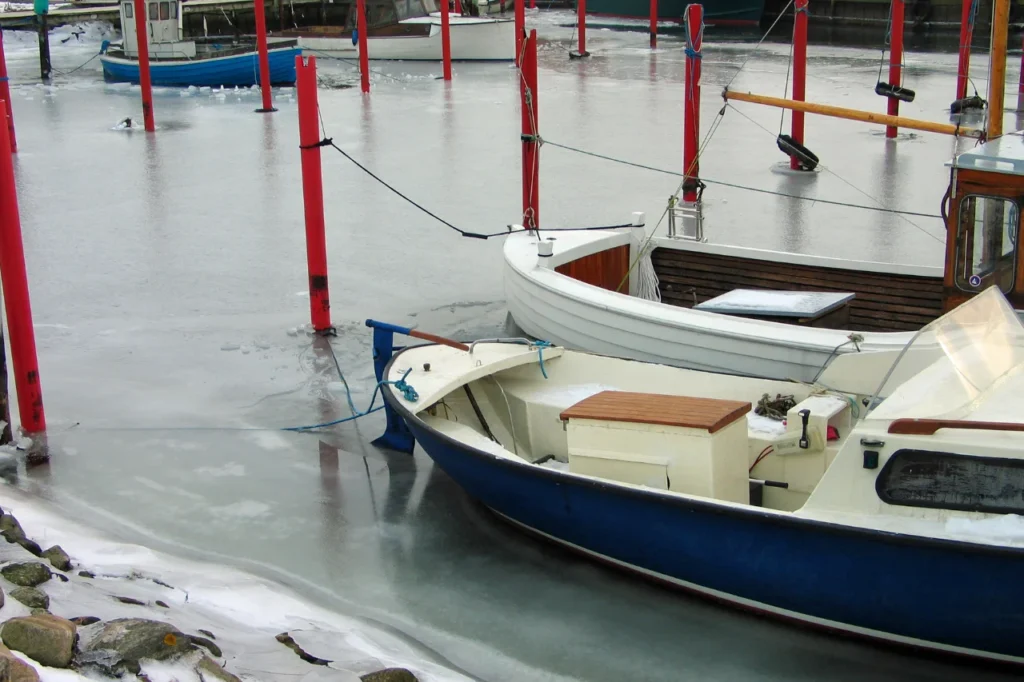
As the name suggests, it means leaving your boat in the water but protecting it with heaters or bubbler systems to protect the boat from freezing solid water.
Out-of-Water Storage
It means removing your boat from freezing water and storing it in a dry storage on land.
Advantages
The pros of in-water storage include lower cost, protecting wood hulls from cracking, and being ready to go instantly when spring arrives.
The pros of out-of-water storage include easy maintenance, freeing up space at the marina, and safety from ice.
Disadvantages
The cons of in-water storage include the risk of damages of freezing water and the risk of marine growth. Moreover, you need equipment like heaters and light bulbs to prevent freezing.
The cons of out-of-water storage include high storage expenses and the risk of drying of wood and hull stress of fiberglass.
Which is Better?
It depends on the location, the local climate, access to storage facilities, and budget. For very cold freezing temperatures, dry storage is better, and for mild climates where water does not freeze, in-water storage is better.
Common Boat Winterization Mistakes
Skipping Deep Clean
Grease, debris, grime, and salt left uncleaned on the boat can cause corrosion, stain the surface, and leave unpleasant odors if left uncleaned.
Failure to Drain Water From the Engine
If the water is not completely drained from the engine, it can freeze and rupture the seal. Water will start to trickle in if the seal is broken.
Skipping Fuel Stabilization
If you don’t stabilize fuel, it can lead to moisture buildup and clogged carburetors. When you take out your boat in the spring, there will be issues starting the engine.
Leaving the Battery Connected
Storing your boat with the battery connected will drain the battery and cause freezing damage. Discharge from the damaged battery can affect the components surrounding it.
Using Non-Marine Antifreeze
Non-marine antifreeze does not work for marine systems. Using them will result in cracked pumps and fittings, damaged seals, and damage to the environment
Using Improper Covers or No Covers
Using an old tarp or a bimini cover used for sun protection instead of a proper, ventilated winter cover will not protect your boat from freezing snow.
Waiting for the First Frost
Delaying until the first freeze is a big mistake.
Winterizing your boats can be easier if you choose the right marina that offers both winterizing and storage services. This saves your valuable time and saves you from the consequences of winterizing mistakes. Are you not sure which marina nearby is good and provides the services you are looking for? Slipstream is the best platform where you can find marinas, compare them, check their availability, and contact them directly. You can do them all in one place, the Slipstream.
Protect your boat this winter with Slipstream.
FAQs
When Is The Best Time To Winterize A Boat?
The best time to winterize a boat is before the first freeze. In the northern region, it is usually in the early or mid-fall. In the southern region, winterization is minimal and will be done when the boat remains unused for a long time.
Do I Need To Winterize A Boat In Mild Climates?
Yes, winterization is essential in mild climates because cold nights and cold snaps can cause damage to your boats. If the boat is not used for an extended period of time, it should be winterized to protect it from sudden temperature drops.
How Much Does It Cost To Winterize A Boat?
The cost of winterizing a boat varies based on the size of the boat, the engine type, location, and the complexity of various systems. If you are going for DIY winterization, it may cost a few hundred dollars. Professional winterization will cost more.
Can I Winterize A Boat Myself?
Yes, you can do it yourself, following manufacturer manuals and the right marine-safe products. However, complex systems need professional care. Wrong steps can lead to costly consequences.
Should I Remove My Boat Battery For Winter?
Yes, you should remove the battery and store it in a cool, dry place. Using a battery maintainer helps in preventing discharge, increasing the lifespan of the battery, and avoiding freezing damage. Removing the battery is highly recommended in areas with a colder climate.