Your boat is not just a mode of transport; it is your escape from the world, your hideaway for weekends, and occasionally, your most valued asset. Nevertheless, boat theft remains the most annoying and expensive problem for owners in the U.S. Heists of thousands of boats occur every year, often carried out quickly, and these boats end up in marinas, driveways, or storage yards across the country.
But there is good news: you can make your boat much less appealing to thieves. By applying the right protective measures and choosing smart storage, you can drastically reduce your chances of becoming a victim. Here is your complete guide to safeguarding your boat and keeping your peace of mind afloat.
Why Boat Theft Happens
In most cases, thieves are not experts; rather, they are just opportunists. They spot the boats, which are easy to access, poorly lit, and kept in open places. Trailers are the most vulnerable ones as they can be towed away in no time.
The majority of the stolen boats are in the 20-29 feet length category with outboard engines or valuable electronics, which can be resold quickly. Moreover, the number of unexpected thefts happening so close to home is alarming- from driveways, storage yards, and even neighborhood streets, where it is much easier for thieves to get away with it.
Understanding how and why boat theft happens is the first step in preventing it. The harder and riskier you make it for a thief, the more likely they’ll move on to an easier target.
Store It Smartly
Smart storage is your first line of defense. How and where you store your boat can make all the difference.
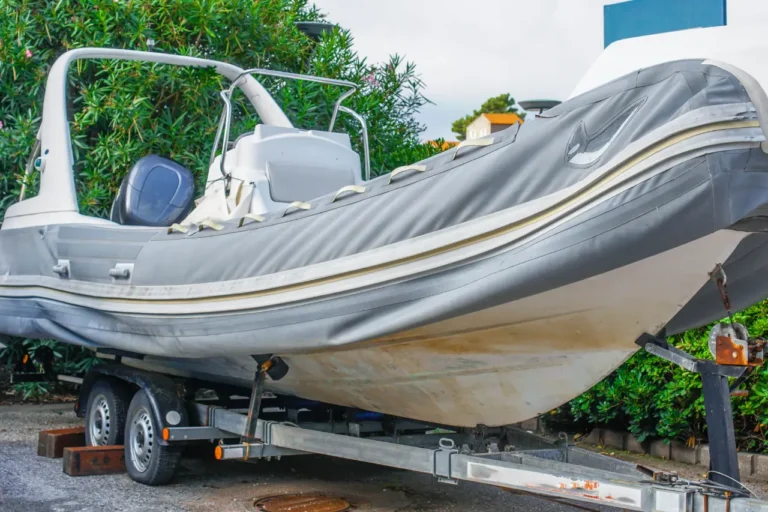
- Keep it out of sight. Whenever possible, store your boat in a locked garage or fenced area. If it must stay outside, position it so it’s difficult to move – for example, park your vehicle in front of the trailer or face the trailer tongue toward a wall or fence.
- Block trailer access. Use a heavy-duty coupler lock and safety chains to secure the trailer to a fixed object such as a post or tree. Removing one wheel or using a wheel lock also makes towing difficult.
- Cover your boat. A full cover not only protects against the elements but also conceals valuable equipment inside. Out of sight often means out of mind for would-be thieves.
- Choose secure marina storage. If storing at a marina, select one with gated access, bright lighting, and surveillance cameras. Ask about overnight staff or security patrols before committing to a slip.
By making storage less convenient, you dramatically reduce the risk of theft. Thieves prefer easy, quick getaways.
Lock It, Chain It, Track It
Think of your boat’s security like layers of armor; the more layers you add, the better protected you are.
- Use multiple locks. Secure the engine, propeller, and outdrive with marine-grade locks designed for saltwater and outdoor conditions. Lock the steering wheel, fuel tank caps, and cabin doors as well.
- Install a kill switch or ignition lock. An immobilizer system that prevents the engine from starting without the correct key or code adds serious protection.
- Add an alarm system. A combination of motion sensors, pressure switches, and sirens can alert you. The very presence of a flashing LED light hinting at an alarm is often sufficient to dissuade a burglar.
- Get GPS tracking as a necessity. The location of a small tracker hidden onboard can be monitored in real-time on your mobile phone. GPS can greatly enhance the chances of recovering your boat if it goes missing.
- Illuminate it. The thieves have a strong aversion to being publicized. Surround your storage area or dock with motion-activated floodlights or solar lights.
A combination of visible security measures (like chains, locks, and lights) and hidden defenses (like GPS and alarms) forms a very effective security arrangement.
Mark and Document Everything
Even the most efficient security measures can’t guarantee 100% protection, which is why documentation is so important. If your boat gets stolen, precise records will help the police and insurance companies to spot and recover it quickly.
- Record serial numbers. Make a note of your boat’s Hull Identification Number (HIN), engine serial numbers, and trailer VIN. Keep both digital and paper copies in a safe location.
- Take high-quality pictures. Get hull, interior, engine, electronics, and any unique marks from different angles. Upload the images to the cloud or save them on an external drive.
- Label valuable equipment. Etch your initials or registration number on portable electronics like GPS units, radios, and fish finders. Visible ID markings make resale difficult.
- Secure your documents. Keep your registration and title at home or in a safe, never on the boat. A thief with your paperwork can try to pass the vessel off as legitimately owned.
Detailed documentation not only aids recovery but also streamlines your insurance claim if theft occurs.
Choose the Right Storage Facility
If you rely on a marina or boatyard for storage, take time to assess their security before signing up. Look for:
- Controlled access. Gated entry points with key codes or staff monitoring are ideal.
- Good visibility. Well-lit lots and walkways reduce hiding places and improve the quality of surveillance footage.
- Active monitoring. On-site security or 24-hour cameras deter theft and aid investigations if incidents occur.
- Stable docking setups. Boats should be secured with locks on lifts or docks to prevent quick waterway getaways.
- Clear accountability. Read the storage contract carefully. Some facilities shift responsibility for theft losses to the owner; make sure you know what’s covered.
Your boat’s safety depends not only on your locks but also on the vigilance of the facility that houses it.
Insure and Prepare for the Unexpected
Even with all precautions, you should prepare for the worst-case scenario. Comprehensive insurance gives you peace of mind and financial protection.
- Confirm theft coverage. Make sure your policy covers not just the hull but also accessories, electronics, and trailers.
- Understand your policy type. Agreed-value policies lock in a fixed payout, while actual-cash-value policies account for depreciation. Agreed-value policies guarantee a fixed payout, whereas actual-cash-value policies deduct depreciation. Be aware of which type you hold.
- Keep your insurer’s numbers handy. In the event of theft, promptly inform the local police, your marina, and your insurance company. Be ready to submit all the documents and photos you have readied.
- Review coverage yearly. As your boat’s value or equipment changes, make sure the policy is updated to reflect these changes.
A well-designed insurance plan will give you a certain degree of loss reduction even if the worst happens.
Every Day Habits That Keep Thieves Away
Prevention is not only about locks and alarms; it is the mentality that you have. Make these habits part of your boating routine:
- Always remove the keys from the ignition when you leave your boat for even a little while.
- Keep your trailer license plate securely fastened.
- Avoid leaving “For Sale” signs unattended on your boat.
- Tell a trusted neighbor, dock manager, or friend to keep an eye on your vessel when you’re away.
These small actions, when practiced consistently, go a long way toward reducing theft risk.
Quick Security Checklist
Before storing or leaving your boat unattended, run through this list:
- Trailer tongue locked and facing away from the street
- Trailer secured with chains or wheel locks
- Keys and documents are stored safely off the boat
- The GPS tracker is active and functioning
- Valuable gear removed or locked down
- Lights and alarms are working properly
- Insurance policy up to date
- The storage site is well-lit and access-controlled
Print this checklist and keep it in your garage or boat locker as a reminder before every trip.
FAQs
1. How common is boat theft in the U.S.?
Boat theft is surprisingly frequent, especially in summer and coastal states like Florida, Texas, and California.
2. Are smaller boats more likely to be stolen?
Yes, smaller trailerable boats are easier to move, hide, and resell, making them prime targets.
3. Do GPS trackers really work for recovery?
Yes, GPS trackers greatly improve recovery chances by allowing real-time location tracking.
4. What’s safer? Home storage or a marina?
Both can be safe if secured properly; the key is limiting access and maintaining good visibility.
5. Will my insurance cover personal items on board?
Coverage varies by policy, so always confirm if your personal gear and electronics are included.
Final Thoughts
Boat theft prevention is not a complex issue; it simply involves combining smart security with common sense. The more protection you impose on your boat, the less attractive it becomes to thieves- each measure, from locking the trailer and marking valuables to spending on GPS tracking and solid insurance.
The boat represents freedom, adventure, and beautiful family moments on the water. Safeguard it just as you have done with the maintenance. One thing is for sure: when you are a little more serious about preventing theft, you are not only protecting your property but also your peace of mind.