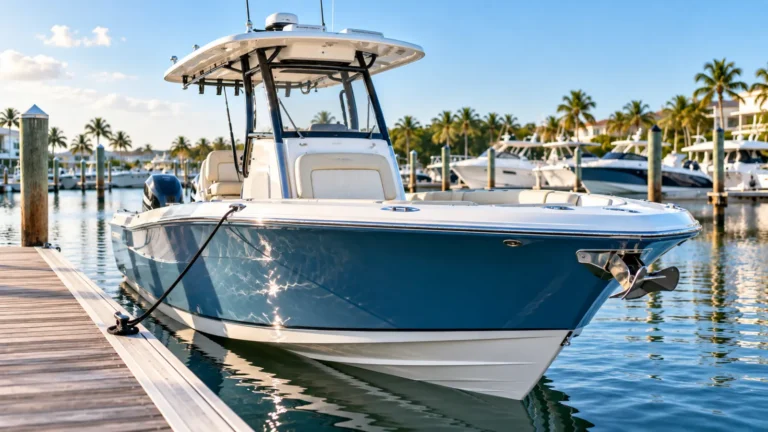
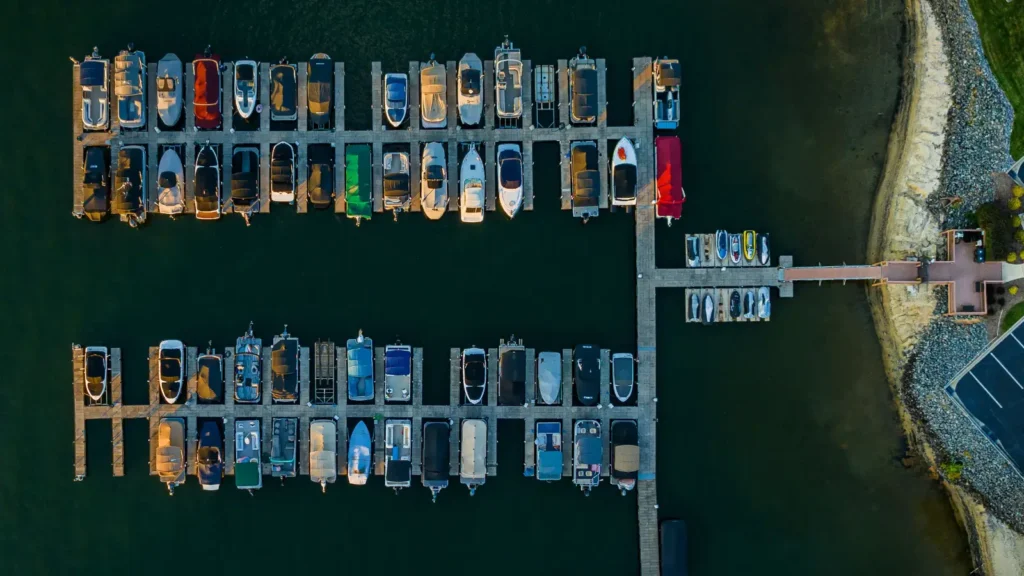
Parking a car can be a daunting task for those new to driving. Similarly, if you are new to boating, docking can be a big challenge. Avoid docking mistakes to keep your boat and crew safe. Here is a step-by-step guide covering all aspects of docking a boat.
1. Let Your Boat and Crew be Ready
The first step is to prepare your boat and crew. What should you do to ensure your boat is ready? Inspect all the important equipment of the boat, including the steering wheel, dock lines, fenders, throttle, and others. Then, communicate with your crew clearly. Give the responsibility of handling the bow and stern lines to one of the crew, and the responsibility of having boat fenders in place to another. Assign the roles clearly to the crew.
2. Let the Approach to the Marina be Perfect
As you near the marina, slow your boat because speed will make it difficult to control it and will increase the risks of collisions. Take a few moments to study the layout, inspect the nearby boats, consider the obstacles on the way, and then proceed to dock. Remember, the angle of your approach should be somewhere between 30 to 45 degrees, as it gives more control when you reverse the boat to a stop.
3. Assess the Weather Conditions
Wind is a significant factor while docking a boat. Check the direction of the wind and find out if it is pushing you toward the dock or away from the dock. Slow the speed if the wind is pushing toward you, and exert more power if the wind is pushing away. You should steer into the wind while approaching the dock. You should also know if there is any current present. If there is a current, have an idea about its speed and direction, as it may affect the boat’s movement.
4. Master the Important Docking Techniques
The two important docking techniques are pivoting and crabbing. Pivoting refers to the technique of turning the boat by 180 degrees to dock it without taking up a lot of space. The pivoting technique is often called the ‘back and fill’ technique, where you use forward and reverse in short bursts to spin the boat. Crabbing technique refers to the technique of approaching the dock at the perfect angle using the wind. It is called crabbing because the crew makes thrusters and the engines crab walk on the side of the boat using the wind and current direction and speed. You have to master these techniques for an error-free, smooth docking.
5. Communicate Clearly
The crew should have a clear idea of the docking plan, and there should be clear communication. The environment can be noisy. So, hand signals may work better than oral communication. However, the best way to communicate is by using radios. They are of great help in communicating with the crew, the harbor master, and other boaters when there are changes to docking plans.
6. Secure Lines Carefully
While securing lines, you should consider the speed of the current and the wind. Then, control the movement of the boat using the spring lines first, and then by stern lines. The lines should be secured with proper knots to ensure there is enough tension. The use of fenders is recommended for added protection. Ensure the crew members are ready with lines and a hook. Here are two things you should remember while securing lines. The first one is to keep checking your lines frequently and not to use your hands for pushing.
7. Double-Check and Make Additional Adjustments
After tying the boat, first switch off the engine. Then, double-check that all lines are secure. Ensure that the boat is stable and is not shifting. Make adjustments if required to maintain its position.
Important Tips
- When you practice docking, do it when the water is calm and the wind is not strong.
- Know the measurements and the handling characteristics of the boat if you want to have full control.
- Every boat is different. So spend some quality time to get familiar with it and find out how it handles speed and how it maneuvers in different conditions.
- Always ensure the coils are untangled and ready to use.
- Avoid approaching too fast, which is a common mistake in docking.
At first, docking can feel a bit stressful, but don’t worry, practice will build your confidence. Stay calm, alert, and don’t panic. Be patient, you’ll get the hang of it and dock like a pro.
Do you want to find a marina for docking? Visit SlipStream, where you can find and book a marina instantly. Reserve your spot in just a few minutes without leaving the comforts of your home. Docking is made simple with SlipStream. What are you waiting for? Start your journey now.